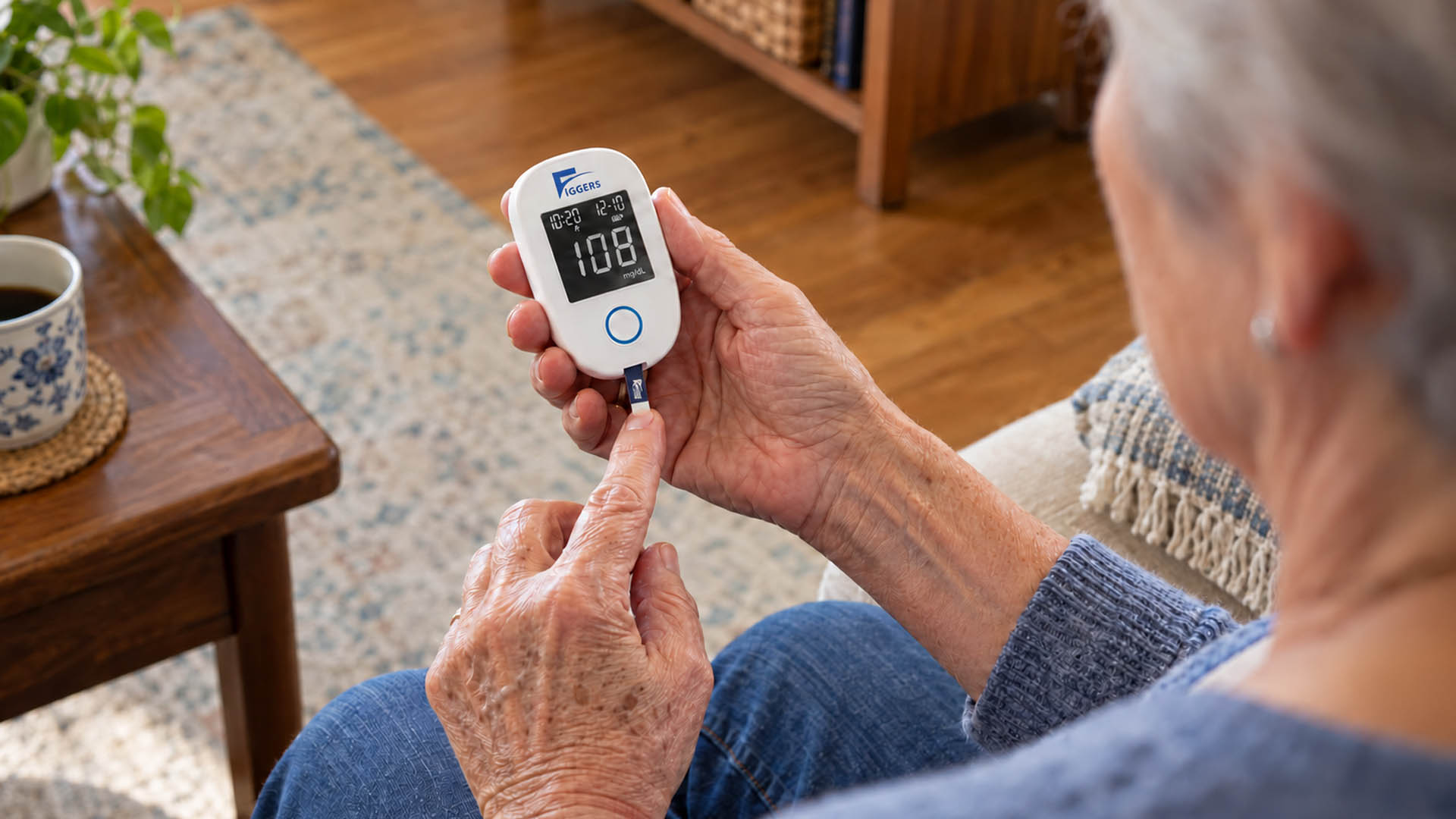
Chronic conditions are managed in the months between office visits, not during them. FiggHealth Remote Patient Monitoring (RPM) is a cloud platform developed in Fort Lauderdale. It collects physiological readings from connected devices in a patient’s home, transmits and stores them automatically, uses AI-assisted triage to prioritize patients who need attention, and alerts the care team so a nurse or physician can intervene before a problem becomes an emergency room visit. This article explains the platform architecture, its integration with telemedicine and the EHR, and why the model fits Florida’s chronic disease profile.
A patient with diabetes and high blood pressure may see a provider four times a year. Each visit produces a snapshot: one glucose value, one blood pressure reading, one weight. The other 361 days can become a blind spot. That is when medications may stop working, infections may develop, and readmissions can take shape. Remote patient monitoring is designed to replace the snapshot with a more continuous picture.
The chronic disease picture in Florida
Florida carries one of the largest chronic disease burdens in the country. The Florida Department of Health’s 2025 Diabetes Advisory Council Legislative Report says diagnosed diabetes affected 12.2 percent of Florida adults in 2022—more than 2.1 million people—with prevalence of 25.4 percent among residents aged 65 and older. In state fiscal year 2022–2023, Florida Medicaid spending exceeded $1.4 billion for members with hypertension and $1.1 billion for members with diabetes, making them the program’s two costliest chronic conditions. Diabetes was Florida’s seventh leading cause of death in 2022.
The report also identifies rural counties—including Gadsden, Madison, Hamilton, Dixie, Putnam, Sumter, DeSoto, Highlands and Glades—where diabetes prevalence far exceeds the national average. In these communities, the distance to a specialist can be measured in hours, and a missed warning sign may end in a hospital stay. The report notes that telemedicine can shorten the loop between patient and provider and remove transportation barriers. Remote monitoring adds a stream of health data to that loop.
What FiggHealth Remote Patient Monitoring is
FiggHealth RPM is a software-as-a-service platform that lets care teams digitally monitor and engage patients outside the traditional care setting. Connected devices collect physiological data and transmit it automatically to the FiggHealth health platform. There, AI-capable technology supports patient triage, automated follow-up and alerts to care teams when a patient’s condition changes.
The platform has two faces. Patients use a smartphone app with a user-friendly interface that pairs with multiple devices, synchronizes data, delivers reminders and allows them to share data and request medication refills. Care teams use a secure web portal with dashboards, reports, historical data analysis and medical transcripts. The same online portal can serve patients across facilities and companies, so a patient can retrieve lab reports, medical charts, medication refills and appointment requests in one place, regardless of which site provided the care.
How the data pipeline works
The flow from a reading in a patient’s kitchen to an action by a nurse has five stages:
- Capture. A connected device—such as the FiggHealth Smart Wireless Glucometer, a blood pressure cuff, a pulse oximeter or a scale—takes a measurement. The device transmits it to the FiggHealth smartphone app, which adds the patient identity and timestamp.
- Transmit and store. The app forwards the reading over an encrypted connection to the cloud platform. The reading is stored in the patient’s longitudinal record and made available to the care team portal.
- Triage. The platform evaluates each new reading against thresholds set by the care team and against the patient’s own history. AI-assisted tools can rank patients by urgency, helping a nurse reviewing a large panel see critical cases first.
- Follow up and alert. The system can prompt a patient to retake a reading or confirm medication, and alert the care team when readings are persistently abnormal or outside defined boundaries.
- Intervene. A care coordinator contacts the patient. When a reading warrants it, the physician can provide a virtual visit through the telemedicine-equipped record available alongside the RPM system.
Historical data analysis supports the clinical conversation. Instead of reacting to a single value, a provider can review 30, 60 or 90 days of readings, identify trends and assess whether a medication change is working.
Integration with telemedicine and the EHR
FiggHealth positions RPM as part of a connected care platform rather than a standalone product. A practice adopting the program receives a telemedicine-equipped electronic medical record together with the Smart RPM system. When the clinical team observes a pattern of abnormal readings, the physician can move directly to a virtual encounter. This can support timely intervention without requiring the patient to travel, which is a practical advantage for rural Florida patients and homebound seniors.
The platform can also integrate with a complaint system to build a patient relationship record, giving the organization data for key performance indicator reporting and a more complete view of each patient’s engagement.
Clinical and operational design goals
FiggHealth designs the program around three sets of stakeholders:
Hospitals
Improve population health visibility and care-team working conditions, lower monitoring infrastructure investment, and reduce the cost of care through earlier intervention.
Clinicians
Replace guesswork with continuous readings between spot checks, support faster treatment adjustments and reduce trial and error.
Patients
Support an earlier return home after a hospital stay, greater confidence and comfort, fewer wires and interruptions, and targeted, personalized care.
The program is also designed to be sustainable for the practice. Medicare recognizes remote physiologic monitoring services under established CPT codes covering device setup and patient education, device supply and data transmission, and clinical staff time spent reviewing data and communicating with the patient. Coverage and payment requirements vary by payer and service, so practices should confirm current requirements for each program. A financially sustainable program is one that can continue serving patients year after year.
Implementation methodology
A FiggHealth RPM program typically proceeds in four phases. The practice identifies the patient population to enroll, such as patients with uncontrolled diabetes or hypertension, and defines clinical thresholds and escalation rules. Patients are enrolled, receive connected devices and are trained to use the smartphone app, with reminders configured for their measurement schedule. Care coordinators monitor the portal daily, act on triaged alerts and document their time. Monthly reporting reviews adherence, alert volume, interventions and outcomes against the program’s key performance indicators, and thresholds are refined as needed.
Data security runs through every phase. Readings are transmitted over encrypted channels, portal access is controlled by role, and the platform is built to meet HIPAA privacy and security requirements. FiggHealth does not publish patient-identifiable information and respects applicable consent requirements.
Who benefits
- Patients with diabetes, hypertension, heart failure or chronic respiratory conditions who need oversight between visits.
- Patients recently discharged from a Florida hospital during the weeks when readmission risk may be highest.
- Rural residents and homebound seniors for whom travel to a clinic is difficult.
- Care coordinators and nurses who can manage large patient panels through triaged dashboards instead of phone call logs.
- Practices and hospital systems building population health programs designed to be clinically effective and financially sustainable.
Why it matters for Florida
Florida’s older population, extensive rural geography, high diabetes and hypertension prevalence, and significant public spending on chronic disease make continuous monitoring a practical tool for providers. A platform that collects readings automatically, prioritizes patients who need attention and connects directly to a virtual visit can help shift care from reactive to proactive. It also produces structured data that Florida health systems can use to measure population health performance.
Looking ahead
FiggHealth continues to expand the devices supported by the platform and the analytics available to care teams, building on the same cloud infrastructure that serves its consumer glucometer users. Florida practices and hospitals interested in launching or expanding a remote patient monitoring program can request a demonstration or call 1-800-391-2801.
Sources
Florida Department of Health, 2025 Diabetes Advisory Council Legislative Report.
Centers for Medicare & Medicaid Services, Remote Patient Monitoring and Care Management Services and CPT code descriptions.