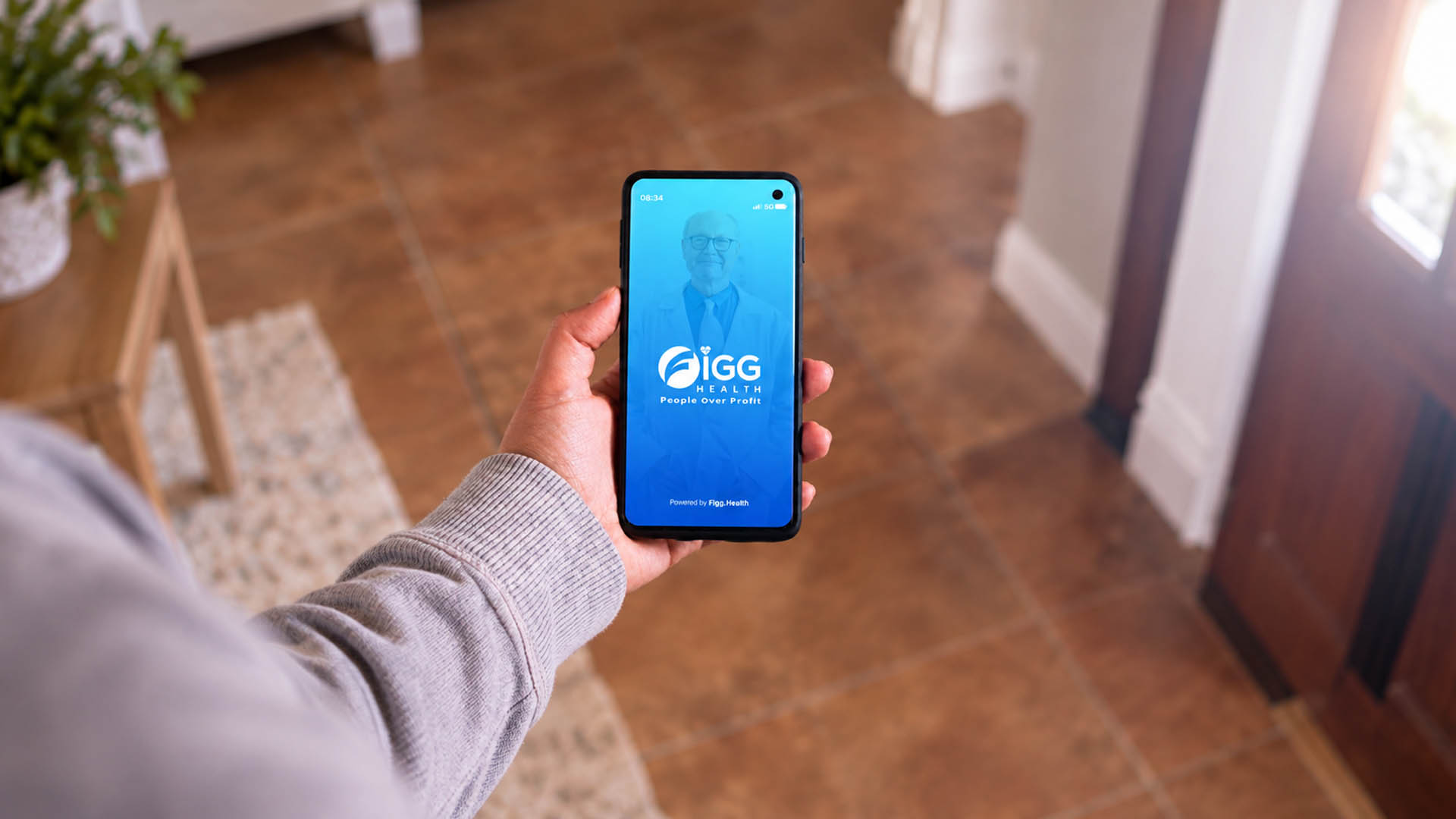
For a grandmother in a rural Florida county or a parent with a feverish child at midnight, the obstacle to virtual care is usually not the doctor. It is the download, the account setup and the 20 minute call limit. FiggHealth Telehealth, developed in Fort Lauderdale, removes those obstacles: it runs in any modern web browser, places no limit on call duration and alerts a rotating panel of emergency providers by SMS and email the moment a patient needs help. This article explains the platform’s design, its integration with existing clinic systems and what it offers Florida providers and patients.
Telehealth became an everyday part of Florida healthcare in a matter of months, but much of the technology deployed in that rush was built for office workers with new laptops, not for an 80 year old patient with a borrowed tablet or a rehabilitation center with a shared nursing station. FiggHealth approached telehealth from the patient’s side of the screen, and then built the provider and administrative tools around that experience.
The access problem in Florida
Florida’s geography and demographics make virtual care unusually valuable. More than one in five residents is aged 65 or older, a group in which chronic conditions and mobility limits are most common. Large parts of North and Central Florida are rural, with long drives to specialty care. The Florida Department of Health’s 2025 Diabetes Advisory Council report points to telemedicine as a way to give patients faster feedback from their providers and to remove barriers such as transportation. Every hurricane season adds another layer: when roads flood or a clinic loses power, a patient’s ability to reach a provider from home becomes a matter of safety.
Florida law supports this model. Section 456.47 of the Florida Statutes sets the standard of practice for telehealth and provides for Florida licensed providers, and registered out of state providers, to deliver care remotely. The remaining barriers are practical ones, and they are the barriers FiggHealth’s platform is designed to remove.
What FiggHealth Telehealth is
FiggHealth Telehealth is a modular virtual care system with three parts: a browser based patient experience, mobile applications for patients and for providers with their own dashboards, and a central web portal for the health center’s management and patient engagement teams.
The patient needs nothing more than an internet browser on a computer, tablet or smartphone. There is no application to download and no special hardware to configure, and the system automatically adjusts video resolution and frame rate to the patient’s connection. There is also no limit on the length of a consultation, so a complex medication review or a therapy session is never cut off by the software.
For organizations that want a dedicated app experience, FiggHealth provides patient and provider applications ready to publish on Google Play and the Apple App Store for phones and tablets.
How the emergency provider panel works
The feature that sets the platform apart is its handling of urgent needs. A health center can assign a panel of rotating providers as the designated emergency contact. When any patient requests help, every provider on the active panel receives an SMS and an email immediately. The first available provider accepts the encounter from their phone or computer. This design gives patients 24×7 access to a clinician while allowing providers to share the load, which FiggHealth describes as easier working conditions for healthcare professionals.
The company notes that this model is especially suited to the elderly and to children, two groups whose needs often arise outside office hours and whose caregivers are rarely in a position to install software during an emergency.
Technical foundations
Browser based video without downloads is possible because modern browsers include native support for real time communication. The browser negotiates an encrypted connection directly with the provider’s session, and the platform continuously adapts picture quality to the available bandwidth. For a patient on a rural wireless connection, that means the call stays up at a lower resolution rather than freezing. For a patient on fiber, the picture is sharp.
The consultation itself is not limited to video. The platform supports video, audio only and real time text chat, and allows files and images to be transferred during the session, so a patient can send a photograph of a wound or a medication label and the provider can send instructions back.
Scheduled appointments wait in a virtual queue until the provider is free to accept them, and providers receive free SMS alerts when a patient is waiting. Waiting areas are customizable, so a clinic can present educational videos or its own announcements while the patient waits. Daily and monthly telehealth activity reports show volume and patterns over time.
Integration with existing clinic systems
A telehealth tool that lives outside the clinic’s record creates double entry and lost information. FiggHealth Telehealth integrates with a health center’s existing EMR for appointments and patient information, and can be expanded to integrate with the center’s full EHR and other external systems. Patient registration is streamlined for both new and existing patients, and every software screen and workflow is approved by the health center’s point person before planning, development and delivery, so the virtual experience matches the clinic’s established processes.
The central web portal lets management define key performance indicators, configure automated alerts and build custom reports, giving administrators the same visibility into virtual visits that they have into office visits. The system is designed to expand with features such as digital signing of consent forms, electronic prescriptions, a payment gateway and geolocation.
Deployment options for Florida organizations
FiggHealth offers the platform in two ways. Hospitals and clinics can use the FiggHealth provider portal to set up telehealth appointments for their own providers and begin offering virtual encounters quickly, regardless of which EMR or EHR they use. Alternatively, an organization can have a customized telehealth solution deployed on its own premises and offered under its own brand.
Rehabilitation and care centers are a particular focus. Because the solution is adjusted to the policies and workflows already in place at the facility, FiggHealth states that minimal training and orientation are required, and residents and staff gain a telehealth provider who is never far away, including for emergency calls.
Individual Florida licensed providers who want to expand their practice, build an additional revenue stream or contribute time to underserved patients can join the FiggHealth provider network, provided they are legally able to practice in the state where their patients are located.
Who benefits
- Older adults and their caregivers, who can reach a provider from a familiar browser without installing anything.
- Families with young children, who gain overnight and weekend access to a clinician through the emergency panel.
- Rural Floridians, for whom adaptive video keeps a consultation stable on limited connections and eliminates long drives.
- Rehabilitation and care centers, which can consult a provider for a resident at any hour without transporting them.
- Clinics and hospitals, which gain a branded virtual care channel integrated with their records and measured through their own KPIs.
- Providers, who can work from home, share emergency coverage across a panel and receive alerts only when a patient is actually waiting.
Why it matters for Florida
Virtual care that patients cannot operate is not access. By designing for the browser, removing call limits and routing urgent requests to a shared provider panel, FiggHealth addresses the practical reasons telehealth adoption stalls among the Floridians who need it most: seniors, rural residents and families managing care at home. For clinics, the integration with existing EMR systems and the central reporting portal turn telehealth from a side channel into a measured service line.
Looking ahead
FiggHealth continues to evolve the platform with user and partner feedback and to extend its integrations with clinical systems. Florida healthcare organizations can request a demonstration at figg.health/telehealth, and providers interested in joining the network can start from the same page. Patients and families can call 1-800-391-2801 for information.